Walking the historic inner city of Paramaribo
A half-day route through the thirty hectares UNESCO inscribed in 2002: fort, square, palace, park, cathedral, and the synagogue and mosque that share a street.
Updated
Historic sites · Centrum
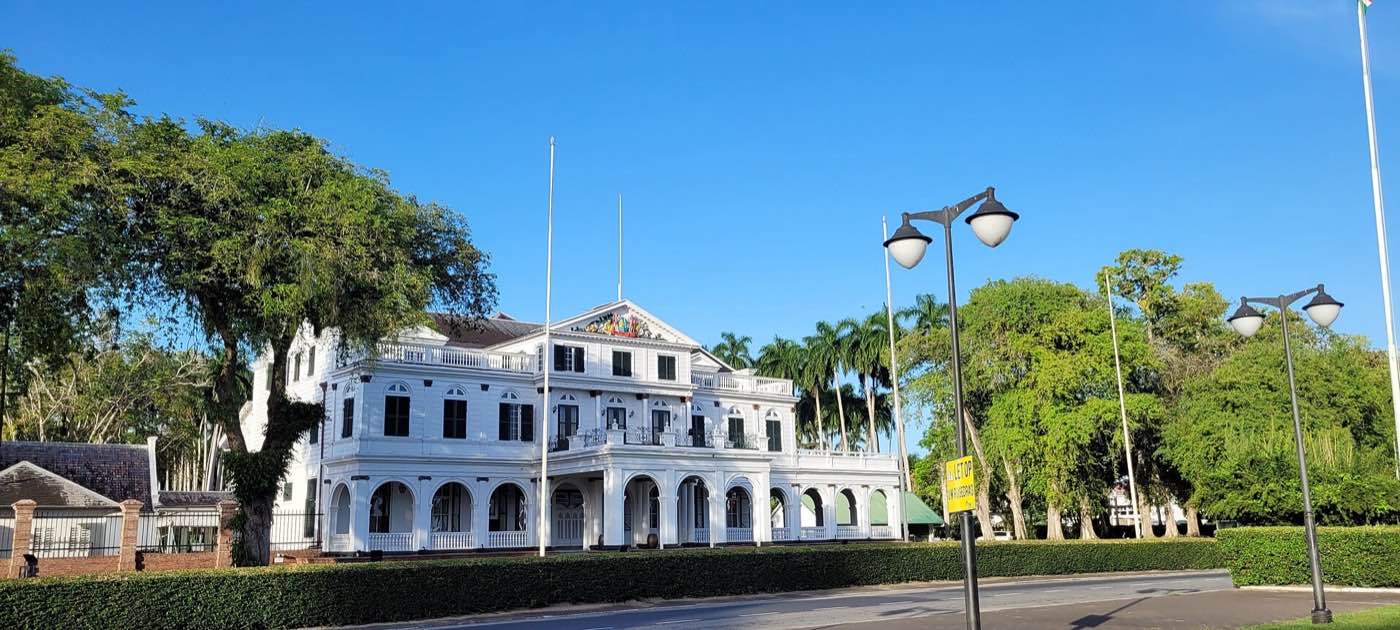
The Presidential Palace of Suriname, a building dating to around 1700, faces Onafhankelijkheidsplein (Independence Square) in the historic centre of Paramaribo; both sit inside the UNESCO-inscribed historic inner city.
Best for first-time visitors, walking tours, photography.
The Presidential Palace of Suriname faces Onafhankelijkheidsplein at Onafhankelijkheidsplein 1, and the building dates to around 1700. Palace and square sit inside the UNESCO-inscribed inner city and are treated here as one entry, because they are one place: the palace is normally seen from the square, about sixty metres away, and the two are a single stop on any walking route.
The square has had several names, and the older ones still appear on maps and in older writing: Oranjeplein and Gouvernementsplein both refer to it. Onafhankelijkheidsplein, Independence Square, dates from independence in 1975.
The square itself is open ground and always accessible. We have found no source stating whether the palace interior is ever open to the public, whether there is a guard ceremony, or whether photography is restricted, so we make no claim about any of them. Behave as you would outside any working head-of-state residence.
A half-day route through the thirty hectares UNESCO inscribed in 2002: fort, square, palace, park, cathedral, and the synagogue and mosque that share a street.
Updated
Checked · 2 named sources
Information on this page is sourced from Wikidata.
A 17th-century Dutch pentagonal fortress on the Suriname River bank in central Paramaribo, now housing the Stichting Surinaams Museum with colonial-period collections and period rooms.
The historic centre of Paramaribo is a UNESCO World Heritage site inscribed in 2002, covering a former Dutch colonial town of the 17th and 18th centuries whose original street plan and over 250 monuments survive.
A large mosque on Keizerstraat in central Paramaribo, in its present form dating from 1984, standing immediately next to the Neveh Shalom Synagogue.
Corrections from owners are welcome and are treated as a source like any other: checked, dated and credited.