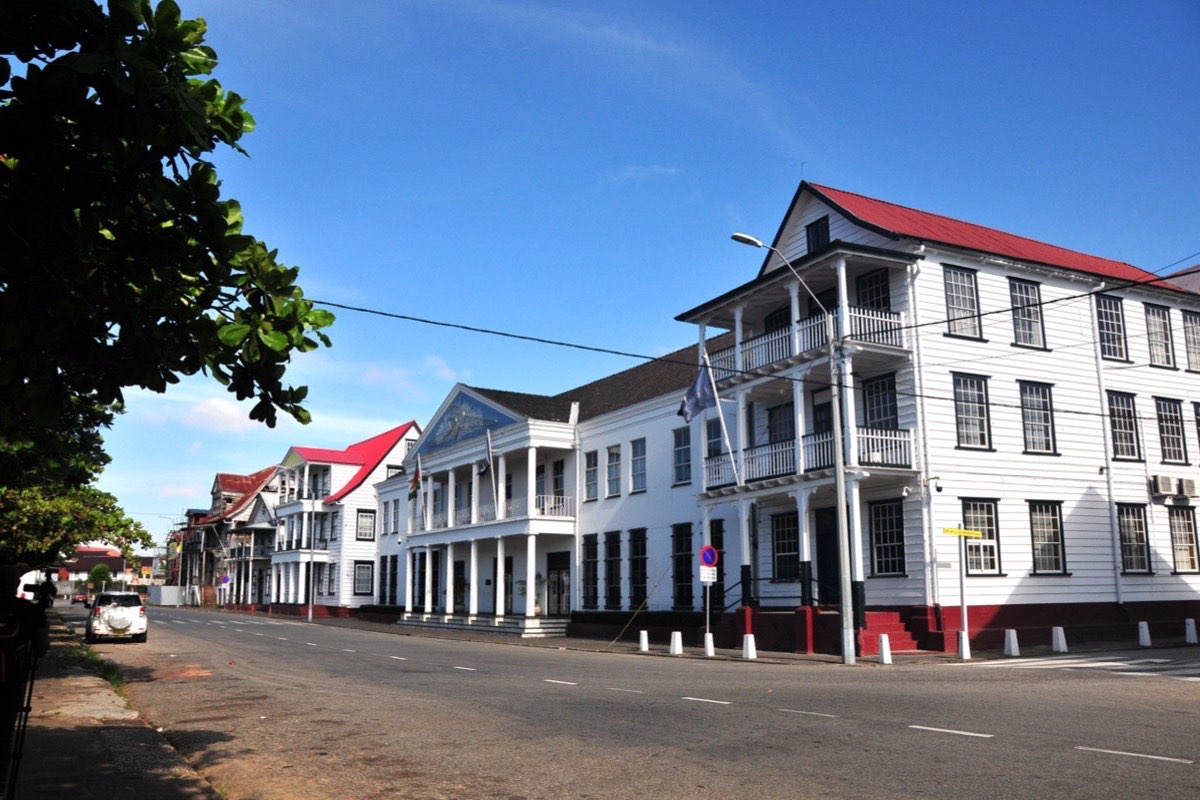
Historic Inner City of Paramaribo (UNESCO World Heritage site)
The historic centre of Paramaribo is a UNESCO World Heritage site inscribed in 2002, covering a former Dutch colonial town of the 17th and 18th centuries whose original street plan and over 250 monuments survive.
Checked · 2 named sources
Photo: Sharmil2672, CC BY-SA 4.0, via Wikimedia Commons
Best for first-time visitors, walking tours, architecture interest.
Prices are printed exactly as the seller published them on the date shown, in the seller's currency, and are not converted. A seller with no published price shows "Not published".
The historic inner city of Paramaribo has been on the UNESCO World Heritage List since 2002, inscribed under site reference 940 against criteria (ii) and (iv), with a core zone of about 30 hectares and a buffer zone of about 60.
Thirty hectares is small: this is a district you can cross on foot in twenty minutes, not a region. What is inscribed is the surviving town plan and the wooden architecture built on it: Dutch layout and construction logic worked in local timber by builders who adapted both to the climate, producing a streetscape that exists nowhere else.
Inside the boundary sit Fort Zeelandia on the river, Onafhankelijkheidsplein and the Presidential Palace, the Palmentuin behind it, the wooden cathedral basilica, the Waterkant frontage, and the synagogue and mosque that stand side by side on Keizerstraat.
Treat it as the frame for a walking morning rather than a single sight. Nothing here charges admission at the district level; individual buildings keep their own hours, and several are places of worship or working government buildings rather than museums.
A five-day route that works around what is actually open: the UNESCO inner city on foot, the Commewijne plantations by boat, Jodensavanne upriver, and one night at Brownsberg, Galibi in season or Fredberg. With published prices and the opening hours that decide the order.
The trips that take five hours or less: the sunset dolphin boat, guided city walks, the food tour, a morning at Peperpot, the fort across the river and the free inner city. Plus why Jodensavanne, Brownsberg and Colakreek are not half days.
Two of Suriname's three World Heritage sites (the country's cultural pair), a plantation district, a ruined sugar factory and a fort museum. What each one holds, which guided walks and tours are published and at what price, and where slavery and indenture are the subject rather than a footnote.
There is no single best tour from Paramaribo. Decide what you came for — history, animals, food, the river, or simply an afternoon — and the choice narrows to one or two. With published prices, the alternatives, and how booking actually works in this market.
A half-day route through the thirty hectares UNESCO inscribed in 2002: fort, square, palace, park, cathedral, and the synagogue and mosque that share a street.
Updated
Sources and verification
Checked · 2 named sources
Information on this page is sourced from Wikidata, UNESCO World Heritage Centre.
A 17th-century Dutch pentagonal fortress on the Suriname River bank in central Paramaribo, now housing the Stichting Surinaams Museum with colonial-period collections and period rooms.
A synagogue on Keizerstraat in central Paramaribo whose congregation dates to 1665; it stands directly beside the Keizerstraat Mosque, a pairing often cited as a symbol of Suriname's religious coexistence.
Is this your business?
Corrections from owners are welcome and are treated as a source like any other: checked, dated and credited.