Walking the historic inner city of Paramaribo
A half-day route through the thirty hectares UNESCO inscribed in 2002: fort, square, palace, park, cathedral, and the synagogue and mosque that share a street.
Updated
Historic sites · Centrum
The Roman Catholic cathedral of the Diocese of Paramaribo, built of wood between 1883 and 1887 and raised to the rank of minor basilica in 2014; it is among the largest timber-built churches in South America.
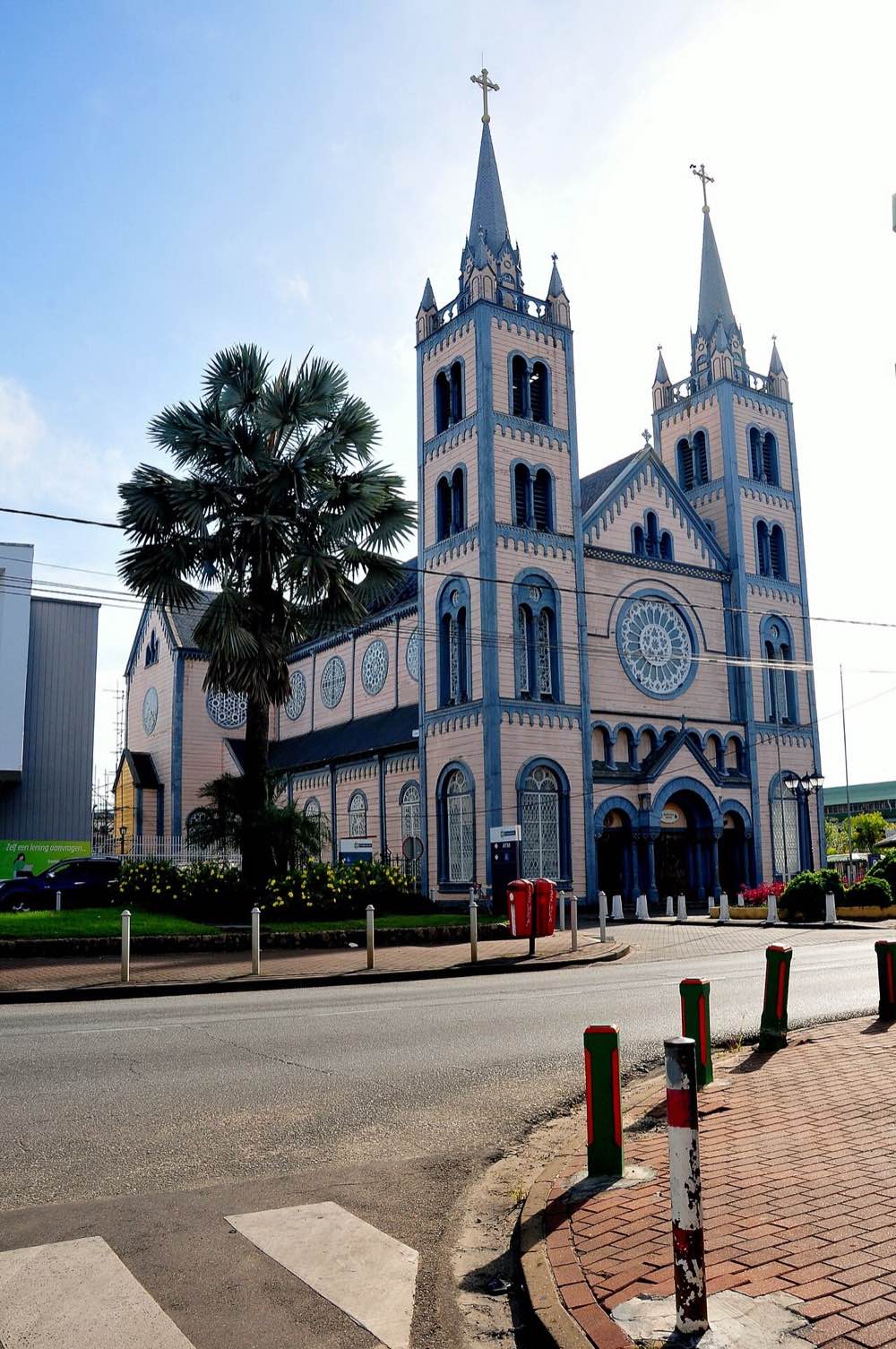
Best for architecture interest, first-time visitors.
The Sint Petrus en Paulusbasiliek stands at Henck Arronstraat 22-24, inside the UNESCO-inscribed inner city, and is registered as a Surinamese heritage monument.
It is the building most often cited as the reason to look up in Paramaribo: a cathedral basilica built in wood rather than stone, which is unusual enough to be the city's architectural signature and is exactly the tradition the World Heritage inscription recognises.
It is a working Roman Catholic cathedral, not a museum. We have not found published visiting hours, an admission arrangement or a photography policy from any source we could verify, so treat entry as something to ask about at the door and dress as you would for any active church.
A half-day route through the thirty hectares UNESCO inscribed in 2002: fort, square, palace, park, cathedral, and the synagogue and mosque that share a street.
Updated
Checked · 2 named sources
Information on this page is sourced from Wikidata, Wikipedia (nl).
A 17th-century Dutch pentagonal fortress on the Suriname River bank in central Paramaribo, now housing the Stichting Surinaams Museum with colonial-period collections and period rooms.
The historic centre of Paramaribo is a UNESCO World Heritage site inscribed in 2002, covering a former Dutch colonial town of the 17th and 18th centuries whose original street plan and over 250 monuments survive.
A large mosque on Keizerstraat in central Paramaribo, in its present form dating from 1984, standing immediately next to the Neveh Shalom Synagogue.
Corrections from owners are welcome and are treated as a source like any other: checked, dated and credited.